Friday, October 26, 2012

Jayne Mansfield's Car Is A Great Movie

I know, I know: two posts in one week - the subsequent shock to your system probably requires that you sit down and take some deep breaths. This is important, okay, so calm down.

First Off:
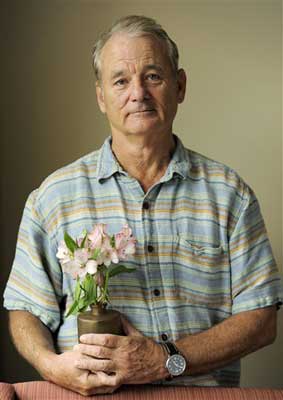
I shook this man's hand

Second Off:
This was a great movie

And Third Off:
Email is easy. It's just like writing a letter, only with your keyboard
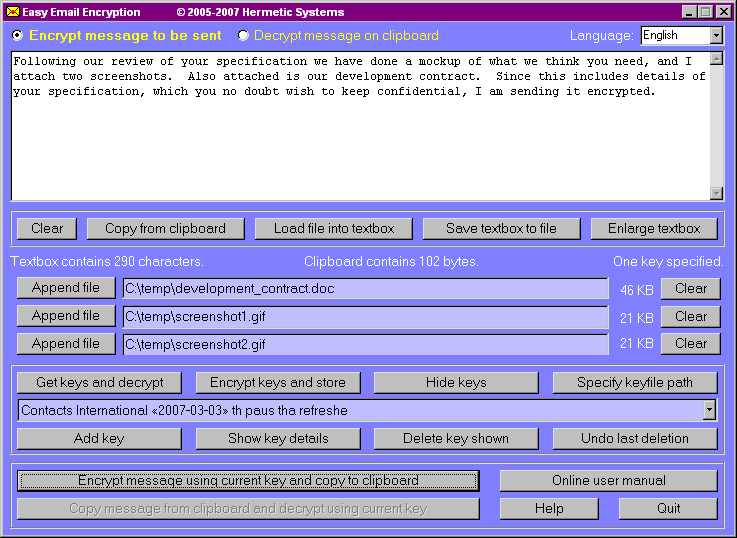
And it hasn't changed in ten years!

I would like now to launch into what I consider to be a counter-attack on all the negative reviews out there concerning this film. I'll start out by saying that Mr. Thornton (you may recall I recently shook his hand), has no interest in either your approval or disapproval of his picture (I speak to those internet-based movie reviewing neophyte's who regard storytelling as a succession of structural checkpoints rather than a living breathing thing). 

Jayne Mansfield's Car is "willfully out of step," and will "struggle to connect with an audience," says Justin Chang of Variety. It "lacks consistent, overall conviction" according to Bob's Movie Reviews and Stale Popcorn just thinks "the title is a doozy." Absolutely. I mean, obviously when Thornton sat down to do this movie his most prominent goals were to assert his celebrity to make the most out of step, emotionally disconnected, frivolous piece of cinema and then slap a name on it that would invoke outrage from every corner of the earth. And then he stuck all his best friends in the picture, just to rub it in our faces!

Or...

Billy Bob Thornton set out to make a movie that meant something to him. That's all. He took something that means a great deal to him and he went to a lot of trouble to share that something with us in the hopes that it might mean something to someone else. And either it did, or it didn't mean something to you but your interpretation of a thing has little to no bearing on whether that thing has worth or merit or deserves to exist.

I like The Avengers; I thought the Social Network was brilliant. Tropic Thunder is hands down the best comedy in recent history and You've Got Mail makes me feel good (it's no use trying to talk me out of it). There's a point I'm trying to make here, and I think it's that it takes all kinds. With all the insipid, transparent, studio-generated, based-on-a-bestselling-vampire-novel muck that's being dredged up and slopped into theaters, is it really that important to focus on the structural inconsistencies of a story that actually came from somewhere real? 

Billy Bob Thornton is a weird dude, there's no doubt about it. He doesn't use email, he wrote a rock opera called "Dinosaur" and he thinks technology is blatantly trying to end human interaction. But at the end of the screening, a man stood up and (I paraphrase) said, "I'm a baby boomer, and if they made more movies like this then we'd all get back into the theaters." Was this guy some kind of national spokesperson for baby boomers? Likely not (likely - who can say; we don't really know). Either way, that's connecting with an audience. A big audience. 

Movies are meant to be stories, and whether that's dudes racing souped up Hondas around the streets of Tokyo, or a rich Alabama family exploring the significance of war and father-son relationships, it all means something to somebody. So relax, damn it! There's rich emotional experiences out there to be had if you'd take a second and stop being so brutally serious. I mean, come on! Billy Bob, close us out:

That's my guy. I shook that hand (I didn't know if you'd heard).


Wednesday, October 24, 2012

Austin Film Festival: The Aftermath

I've never been on cocaine, but I imagine it feels something like being at the Austin Film Festival. Constant stimulation, moments of anxiety followed by moments of ecstasy immediately followed by complete and utter exhaustion. It would be unbearable if it weren't so terrific.

In another way it's like speed dating (also something I only know about through movies and television). Everybody has their best look on, playing themselves up with business cards and nice shoes and very general statements about what exactly it is they do for a living. And, of course, there's alcohol.

I did get to meet John August, I did see James Franco although I don't think he saw me (his eyes were closed for the most part) and even though I did not spot Bill Murray, after the pixie dust settles (cocaine reference?) I must say that there are a number of reasons the festival was a great personal success. And a number of reasons that it was a soul-crushing disaffirmation of my very hopes and dreams.

Why the AFF is the best/worst thing in the world:

Best: The People
What other opportunity do you have to be around such a concentrated large group of similarly motivated minds than at a film festival? I mean, these are your people. These are the people you go see a movie with and then sit at a bar and discuss and argue and use excessive hand gestures to get your point across about said movie. These are the people who understand why it's taken you two years to write your screenplay because they have a screenplay they've been working on for five years with no end in sight. Your people.

Worst: The People
Who are these people? Every one  is a producer, director, screenwriter, creative coordinator or locations-based cinematography - what does that even mean? Throwing names around, like really obscure names that only uber screen savvy people could ever hope to know about. Basically, there's no easier place to pimp your non-existent made up pretend-time shit than at a film festival. Distinguishing your people from these other people can be tricky, so keep a sharp eye out.

Best: The Panels
Watching the X-Files is cool. Watching the director's cut with the commentary on is way cool. Sitting in a room with Chris Carter as he talks about the X-Files is five metaphysical levels above cool. There are things the panels can't do for you: make you a better writer, get you an agent, teach you super secret-y secrets about making words happen. They can awe you. They can inspire you to sit down at your computer and actually move your fingers across the keys, subsequently making words and making you a better screenwriter.

Winner of the FDJM best panelist of all time ever: Lindsay Doran
Worst: Dumb Questions During Panels
"Um, yeah, so I was wondering if you could comment on your use of symmetry throughout the second act, and in particular could you expound on the symbolism of breaking the fourth wall near the end of the turning point in the third act blah blah blah blah." Just stop. You know big words; good job. Keep your mouth shut.

Best: Being Part of Something Cool
You get a badge, you get a bag, you get free drinks and invites to parties and there are for really real screenwriter/director/producers/actors(?) just waiting to talk to you. And to hundreds of other people, but mostly to you. And you're a part of it, and it's super cool. I mean, it's at the Driskill! Am I right?

Worst: Something Cool Has Nothing to do With Sleep
Panels start at 9am, parties don't start until 11pm. The first day it was over I took three naps.

This was my first time at the AFF. It was overwhelming and frustrating and inspiring, but mostly I met some people that I think could be my people and just knowing that you're not alone in this whole thing is worth something. It's worth sleep deprivation and the puny feeling that comes when the guy behind you is talking about Bruce Feirstein like they're best friends and you have to use your phone to look him up because you don't know who Bruce Feirstein is.

These big names, they don't matter. Not now; not while you're trying to build a catalog of semi-respectable stuff you wouldn't be horrified for someone to take a look at. Write movies. Watch movies, read movies and all that, but most importantly write the freaking thing. Write. Write write write! Just write already.

Friday, October 12, 2012

Ladies and Gentlemen, I Am Going to the Austin Film Festival

!

This just in: I'm going to my very first Austin Film Festival. I want to thank God, and the great city of Austin, the illustrious and enigmatic art and science of movie-making (like, the entire concept of it) and also John August, whom I will be stalking like a deranged but mostly harmless and not at all homicidal psychopath throughout the festival. Also, James Franco and Bill Murray - fair warning.

Flowers for me? Oh, you.
 
My good friend and manager Ditty, in her all-encompassing wisdom (likely enhanced to superhero status by her pregnancy hormones), has given me a few pointers. In addition to her experienced suggestions (this not being her first AFF rodeo), I have come up with a few pointers of my own (not being one to let lack of experience on a certain subject prevent me from handing out advice on that same subject).

AFF Pointers for the First-Timer, from a First-Timer:


1. Live in Austin. I feel this is a no-brainer. This city is going to be crowded as shit in a Tyson chicken coop; crowded as chickens in a Tyson chicken coop (I just watched this documentary, and long story short: don't eat Tyson chicken).

2. Own a bike. You do not want to park downtown during AFF. I just have this feeling that it won't work well.

3. Pack snacks. Apparently, food is scarce at AFF. So gather your Cliff bars, your apples and bananas, your small packets of squeezable peanut butter, shove them in that bag with your pen and notebook and get ready for a day of chaos and rushing from one conference venue to another.

4. Bring paper and pen. And backpack.

5. Have good looking business cards. This one is hard to really visualize. Does a name and an email/blog address and the title "aspiring screenwriter (question mark?) really constitute the need for business cards? Should I put my picture on there? Put a bird on it? I don't know. Maybe I could just write it on your notebook if you want to keep in touch that terribly bad. Where do you even get business cards? What about a poster with those little tear off thingies at the bottom, like one you use when looking for a lead singer for your band? Now I'm over thinking it.

6. Don't dress like an idiot. I think sometimes we writers think "oh, I'm a writer; I can dress like a slob because I'm creative and stuff and don't really care about my appearance." No. Negative. You do care, everyone cares. Shower up, put on some decent looking jeans and a fashionable shirt (you know, the kind with buttons), dab on some lip gloss (girls, I'm talking to you) and for god's sake it wouldn't kill you to accessories a little. Come on. We're screenwriters, not graphic designers. This is not a gamers' convention. You're not getting your PhD in astrophysics quantum mechanics math science (you see where I'm going with this).

As a closing remark, let me just say that I am pretty much beside myself with excitement. I've been in Austin a year now, been out of nursing school a year and a half. It's time to get connected. It's time to get motivated. It's high time to finish a new screenplay. I tell you, high time!

Sunday, September 9, 2012

First Draft, Page 5

Yeah, that's right; I've got five pages. Fortunately for me, in the case of first drafts the number of pages marks progress despite the quality of the actual writing on those pages. In terms of quality, I'm not really sure what the quantitative measure of my work would be, but it's most likely some decimal with a zero point something or other.

Like 0.34 pages. That's just a guess.

But at this stage, words are words are words and their mere existence on my computer screen means progress. It's crucial at this point to completely ignore the debilitating feeling that everything you write is utter crap; how it's so bad you're not even sure you'll be able to fix it in subsequent rewrites, or how maybe no amount of work will ever be sufficient to turn the pile of steaming garbage that is your imagination into an actual story that makes any earthly sense at all. Let alone make it entertaining. And funny. And smart.

Better to just give up now.

Ignore that. Head down, full steam ahead, words are words are words. Keep them coming. Keep writing and don't turn back, not to fix your grammar, not to edit your dialogue - seriously, just write it and move on to the next thing. Waiting for genius means you'll never think of anything. You'll never write anything. Get something down on paper (on screen, whatever) and later, when it's actually there, you can pick it apart. Not before. Later. Don't just assume what you're about to write is going to be crap. Write it, then when you see how awful it is you can get to fixing it.

To sum up: Yes, you're first draft is going to suck. Congratulations; sucking is the first step to not sucking.

Saturday, September 1, 2012

In the Race of Screenwriting, I'm Definitely the Tortise

I finally started writing my first draft (yes!). I wrote a whole three pages. Phyoo. Time to take a break. Seriously, those three pages were torture. And they're terrible. So, yeah, really motivated to continue. Luckily, motivation has almost nothing to do with writing. Writing has everything to do with writing, and the actual act exists outside of feeling. I'm doing it right now; writing when I don't feel like it. It's just that what I have to say is so brilliant, I can't just wait around until I feel like blessing the masses with it.

Brilliant - ha! Masses - ha ha!

Slow and steady, and as far as being brilliant is concerned, I know darn well that my particular kind of brilliance comes only after hours and hours of obsessing and reworking and then consulting other people and eventually half steeling other people's brilliance. Okay, so I have yet to be actually brilliant, but that has nothing to do with nothing. As you can see, my full capacity for brilliance is on display here.

Inspiration is a tricky thing. You can't just wait around to do something until you feel inspired to do it, and at the same time, just because you feel inspired to do something doesn't mean you should do it. Right now, I'm inspired to buy a party sized bad of pretzel M&Ms and some trashy magazines, go home and sit on my couch. I'm not trying to be cute here, I in all seriousness feel that those things would make my day. Actually, I know they would, because the last time I ate M&Ms and read a People magazine it was like the best day of my life.

You can't just eat M&Ms and read magazines every day, though. I mean, yes you can, but then you'd be that person who does those things every day and really there's no obvious future in that. Not that I can really see. Unless you made some really funny blog out of it or something, and became famous for it. But you'd have to be really funny or really good looking, or already really rich and I don't really have any of those markets cornered, exactly. So, yeah, actually writing is going to be an important part of the whole being a writer thing for me.

I'm going to write, even when I don't feel like it, and I'm going to keep writing when I feel like stopping. This is how it's always been for me; those spurts of true inspiration are very scarce, probably in part because I've yet to experience much of a return on my investment as far as writing is concerned. I'm working toward a very uncertain and poorly defined goal. The obvious goal is finishing another screenplay, a further goal would be finishing a screenplay that doesn't suck. The end goal is success, but there you have something not very well defined. And temporary. And unlikely.

How's that for motivating?

Monday, August 20, 2012

Simplify It!

Outlining is great. I mean, it's essential and important and a truly great outline is the precursor to a great screenplay. I really believe that, I do. However, outlining has to stop at some point. You can't just outline forever. Well, duh; why even say that? Because if you're anything like me, you easily get caught up in your own outlining, so much so that looking back at all your tables and bullet points and charts and graphs you'll see that you've basically outlined five million different versions of the same movie and now you don't know which one you're actually trying to write.

Too. Many. Choices. Not enough writing.

There comes a point where the complete muddle that is your outline has to be simplified. You have to cut that massive outline monster down at the knees. You can't take on a giant all by yourself, and try as you might instead of starting to actually write a screenplay you'll just end up making the behemoth even bigger.

You have to simplify it.

Among the many tables (I love tables - I just love them) that I use to outline my script I always have a tab entitled "Getting Weird." This is where the outlandish and crazy and really unsustainably insane ideas go for my script. The really strange "what ifs." Of all the fun I have outlining, this page is the most useless. Or is it?

Or. Is. It...?

This is where, after realizing the story was running off without me, I decided to completely simplify the story - strip it down to the barest version possible. I mean, really really primitive stuff; bring it all back to a skeletal representation of what I want it to be. And it turns out that simple is actually much, much better. It's clear. It's focused. It has room to get better.

And that's the thing. The first draft is not going to be brilliant, it's going to be a skeleton. Not even a fully grown human skeleton, but some kind of neanderthal, hunched over, slack-jawed, drooling, mouth breathing idiot blueprint. Second draft, stand that thing up straight, shut that mouth. Third draft, add some flesh, some muscle definition. Fourth draft, fifth draft, skin and hair and lips and eyebrows and dimples. I mean, if it's a dimple kind of movie, otherwise maybe a cleft in the chin or a sinister smile or something like that.

Simple first. Good later. Great lastly. If you're lucky. Wait, no; great if you work hard.

Work hard, then.  

Sunday, August 5, 2012

Making Choices...Wait, No...Making the Right Choices...No...Hmm...Making the Best Choices for Your Screenplay...Wait...Hmm...

Choices are hard, in general, but even more so when considering works of fictional creativity. You could do anything, say anything, make anything happen. It's too much; it's overwhelming. Add to that the pressure of knowing that these choices will ultimately render your work worthwhile or a complete waste of time. One elemental wrong turn, one misguided plot twist and all that hard work is just...sigh...a learning opportunity.

The pressure is nearly paralyzing. It's hard to accept that making the wrong decision is better than making no decision at all because making no decision is so easy and making the wrong decision will likely be the result of hours upon hours of creative anguish.

Also frustrating: the fact that it is so easy to identify wrong choices in other people's stuff. It sticks out like a sore thumb and almost immediately you're like, "oh, man, there it is right there. That's where you went wrong." Yet this is almost impossible to do with your own stuff with the same measure of certainty. There's a reluctance that comes from the knowledge of all the blood sweat and coffee drinks that went into the making of that stupid wrong decision - and now I'm supposed to undo it? I think not. I think I'll just keep it and fix a few other small things that will hopefully help mask the fact that this element (and possibly the story as a whole) just doesn't work.

Being at the very beginning of the creative process with this new script, I'd like to identify the holes as soon and as quickly as possible to avoid spending countless misguided hours writing a steaming pile of refuse. I'd like to apply what I've learned from reading other's steaming piles of...hard work. But how? Hoooooow!?

I have some ideas:

1. Clarity. What is happening here? Can you put it into a couple of sentences, or is it more complicated than that? Because if it's impossible to sum it up, then I don't think clarity is your strong suit with this one.

2. Characters. Is there someone to love, to hate, or is everyone just kind of interesting? Because kind of interesting isn't going to cut it. Someone to root for or against, that's what you need here. You can add more dimension in rewrites, but if they're lukewarm to begin with then why bother?

3. Consistency (yeah, we're going with all C's here). When you lay this whole plot thing out, is there something actually happening at every stage of the game? Is everything that happens pointing to an eventual goal? Are these things that are happening getting more interesting as the story goes on, is something building here? Is there some reasonable idea of what two outcomes we may end up with (the good one and the bad one)? What if the bad one? What then? How bad is it?

I guess another way to look at this is through the eyes of the audience, their expectations. Ideally, the thought life of your audience should go something like this:

Movie begins:
"Oh boy, I'm so excited about this movie. Based on the logline under the poster I have a clear idea of what I'm in for."

10 minutes in:
"Wow, that was a cool beginning. I really like what's his face. He seems cool."

15 minutes in:
"Whoa, that's a curveball. What's his face's whole world is upside down right now. This changes everything. What now?

25 minutes in:
"Well, it won't be easy but it appears what's his face has a plan, a clear goal, and a clear set of friends to help him accomplish this near impossible goal. I think that one girl likes him, and because she is likable and interesting I hope that goes well. Clearly, this will end one of two ways and I am clearly rooting for the positive outcome."

50 minutes in:
"Well, I now have a clearer understanding of these characters; they are not as simple as they at first appeared. There seems to be a definite plan now and clearly these are the steps for that plan to be successful. Failure at any stage of these steps will mean certain failure all together, but the plan looks as if it will juuuuuust work. Also, things are heating up between that girl and that guy and it would appear that nothing could change that. Everything looks good."

75 minutes in:
"Okay, here we go. Final stage of this plan. Everything is in place, so I expect this will work."

80 minutes in:
"Whoa! Did not see that coming. That changes everything. Shoot, is this even going to work now?"

85 minutes in:
Oh geez. This isn't good. There is just no way, no way this is going to work. Dang it! I don't want this to happen this way, but there is a clear logical explanation as to why this is a likely turn of events. This is terrible. I feel crushed for these characters."

90 minutes in:
Wait, I thought they were done for. Could they actually pull this off?

91 minutes in:
Oh my god, they're going to do it! I think they're going to do it!

95 minutes in:
They did it!! I can't believe it! Of course, the solution was there all along! This is clearly the best possible imaginable outcome, even though I had previously only considered two other possible outcomes. How clever!"

100 minutes in:
"Awe, that's sweet. Oooh, that's cool. Awe, true love really does conquer all. Haha, funny moment."

As credits roll:
"That was awesome. I'm telling all my friends about this movie. And that one line, haha, I'll be saying that for a long time."

Roughly, that's it right there. Just make people think those thoughts at approximately those moments, and you should be golden.

Easy. Super, totally, absolutely easy.